Author: Steve Richards

Bill Gates on Microsoft’s strategy around the phone
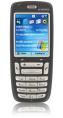
SmartphoneThis is a good interview, where Bill Gates describes Microsoft’s approach to the phone.  A few things struck me from the interview and other stuff I have read:

  • Microsoft don’t make any money on Windows Mobile, but they seem committed to the market for the long term
  • Microsoft know that it won’t be long before the phone is powerful enough to take advantage of its operating system.  At that point they believe they will then have a real advantage over the people who squeezed their operating systems into current generation phones.  Of course as soon as the phone is this powerful it will make a great platform for Linux as well.
  • Microsoft are waiting for the phone to be powerful enough to disrupt the portable game console market,  at this point I suspect they will be ready to compete
  • Microsoft will leverage their integrated innovation strategy
  • The connected car is a huge market, this post talks about the potential
  • The carriers, rather than the phone makers are a key route to market for Microsoft,  I guess that Microsoft with its robust strategy around content and rights management is well placed to woo the carriers
  • Microsoft is to be commended …

More on form factors

GadgetsI just realised that Grahams model ends up working very well for me:

2GB Desktop with 2*120GB disks  = 7 Seat 307 SW
1.5GB TC1100 Tablet PC = Ford Fiesta – this will have to go,  not at all the image to go with the Tablet 🙂
Treo 600 = Push bike
Nokia 6310i = Scooter

Device form factors

307SW_portholeHere is a great discussion about device form factors by Graham.  I particularly liked the summary:

  • Some people will use a big desktop with a big screen, because some people drive a Range Rover.
  • Some people will use a titanium plated ultra-light, because some people drive a BMW Z3.
  • Some people will utilise a standard laptop, because some people drive a Ford Mondeo.
  • Some people will use a large form factor laptop, because some people drive a Renault Grand Scenic
  • Some people will still use the device they have had for the last 10 years, because some people drive a vintage Mercedes sports car.

I am not sure what sort of car driver I am, using Graham’s Model, as I have a variety of different devices to suit the need, perhaps I am just one of those people who has a big garage, or in the UK a long drive (we fill our garages with junk)!  In fact I have a Peugeot 307SW  7 seater (4 kids) and a Ford Fiesta.

A story that vindicates my approach to time management

In this post I talked about my approach to time management.  Graham has this great story on his site that illustrates the same approach but much more eloquently!

A professor stood before his philosophy class and had some items in front of him.When the class began, wordlessly, he picked up a very large and empty mayonnaise jar and proceeded to fill it with golf balls.

He asked the students if the jar was full.They agreed that it was.

The professor then picked up a box of pebbles and poured them into the jar. He shook the jar lightly, and the pebbles rolled into the open areas between the golf balls.

He then asked the students again if the jar was full; they agreed it was.

The professor next picked up a box of sand and poured it into the jar. Of course, the sand filled up everything else.

He asked once more if the jar was full. The students responded with a unanimous “yes.”

The professor then produced two cups of coffee from under the table and poured the entire contents into the jar, effectively filling the empty space between the sand. The students laughed.

“Now,” said the professor, as …

A story that vindicates my approach to time management

In this post I talked about my approach to time management.  Graham has this great story on his site that illustrates the same approach but much more eloquently!

A professor stood before his philosophy class and had some items in front of him.When the class began, wordlessly, he picked up a very large and empty mayonnaise jar and proceeded to fill it with golf balls.

He asked the students if the jar was full.They agreed that it was.

The professor then picked up a box of pebbles and poured them into the jar. He shook the jar lightly, and the pebbles rolled into the open areas between the golf balls.

He then asked the students again if the jar was full; they agreed it was.

The professor next picked up a box of sand and poured it into the jar. Of course, the sand filled up everything else.

He asked once more if the jar was full. The students responded with a unanimous “yes.”

The professor then produced two cups of coffee from under the table and poured the entire contents into the jar, effectively filling the empty space between the sand. The students laughed.

“Now,” said the professor, as …

jk makes the right choice – a TC1100!

Tc1100_2It may be an old machine, but it is still in many ways a near perfect design.  I have listed before the problems I had with my original TC1100, and why I changed my mind, but at the end of the day fixing the problems would introduce new weaknesses.  jk of jkOnTheRun documents his decision process.

so I have ordered the HP tc1100.  The tc1100 has a 10.4″ screen and only weighs 3.1 pounds without the keyboard attached which I really like.  This is the closest device to my dream mini-Tablet in both size and function.  The tc1100 is a true hybrid Tablet with a keyboard that can be attached or detached at will so it will be the best solution for the way that I work.

The End of Corporate Computing – Rubbish!

WaterIn this article Nicholas Carr describes the “End of Corporate Computing” and justifies as follows:

Three technological advances are enabling this change: virtualization, grid computing and Web services. Virtualization erases the differences between proprietary computing platforms, enabling applications designed to run on one operating system to be deployed elsewhere. Grid computing allows large numbers of hardware components, such as servers or disk drives, to effectively act as a single device, pooling their capacity and allocating it automatically to different jobs. Web services standardize the interfaces between applications, turning them into modules that can be assembled and disassembled easily.

I don’t see it this way at all for the following reasons:

  • Corporate computing is about people, employees, customers, suppliers etc and their interactions.  None of these people think of computing as Virtualised Servers, Storage, Grids etc.  These are the utilities that corporate computing runs upon, not the essence of Corporate Computing.  This analogy is like saying the end of corporate heating and lighting, just because electricity is supplied by a utility.
  • Slightly closer to the truth is the part concerning Web Services, but again he looses me when he says “modules that can be assembled and disassembled easily”,  surely this …

X1 Now Searches Notes

X1X1 Technologies on Friday started shipping a version of its X1 Desktop Search software that supports Lotus Notes, the first time that the local and network search product has deigned to deal with IBM’s messaging product.  I installed it but Notes does not appear in the list of Email systems to index, so I will have to investigate 🙁