

How Skype has changed the way I do voice communication
 I have been pretty pleased with Skype so far. Here is a snapshot of how I use voice communications now:
At my home office:
- when I get home I put my mobile (Treo 600) in its cradle and this initiates an automatic auto-forward to my SkypeIn number, which also comes with free voicemail.
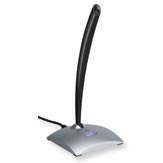
- at my desk I am using my Logitech noise cancelling USB Microphone and my desktops speakers, people tell me the quality is very good – so there is no need to mess around with headphones
- I have contacted about 30 people who I often call to try and get them using Skype, about 20 of them have installed it. For these people Skype to Skype calls have been very successful.
- I still have quite a lot of people that I contact who are not using Skype, mainly because they are highly mobile so for these people I have been experimenting with SkypeOut. The quality of SkypeOut does not seem as good as Skype to Skype, but it seems good enough in most cases. I have suffered a few dropouts when calling mobiles (UK –> Australia) but this may have happened anyway. The call charges were much less …

 Michael
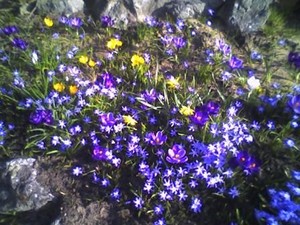 Where I live we have a micro climate, we always get better than average weather, a lot less rain than just a few miles inland. But this Winter has been amazing, in fact it feels like we have missed winter altogether. the last month it has only rained a couple of days and most days we have had at least some sunshine. I took this picture of the flowers as we walked along the beach promenade on Sunday, the picture was taken with the built in camera in my Treo 640*480, but good enough for the odd blog posting.
 I just got the following invite from Microsoft, it looks like a great event, hopefully someone will pay for me to attend

 After an initial abortive attempt at using
 It’s been widely reported (see this
 I used to be one of those “everything on my laptop” sort of guys until I started working from home. Now I use the device pyramid principle, which is another way of saying that I exploit the strengths of 3 devices to offset the weaknesses of those same three devices. I works like this:
 My least powerful, but most accessible device is my Treo. I can access anything on it with a couple of clicks, and its up and running in a second (actually its always on but it takes a second to activate the screen). Because it’s my phone I never leave home without it. The information I carry on it is the basic stuff:
 Next comes my Tablet, it’s much bigger, takes a couple of minutes to get going, and even longer to find what I am looking for. However being more powerful it has everything that the Treo has plus:
 Since I started working from home I have increased the amount of house work that I do, my share is:
 I have gradually refined my
 My company is currently re-launching its knowledge management environment, so I thought it would be useful to re-think my requirements from a personal and then (in another blog post) from a team/project perspective. The diagram on the left represents a simplified view of the personal information management lifecycle and I will step through each phase looking at the commodity tools that I think all knowledge workers should have, by right, in todays world. Then I will discuss some of the more advanced tools that may only be applicable to certain high value processes or industry segments. First off I make no apologies for the simple model I have chosen to use. More complete lifecycles have been modelled, for example